
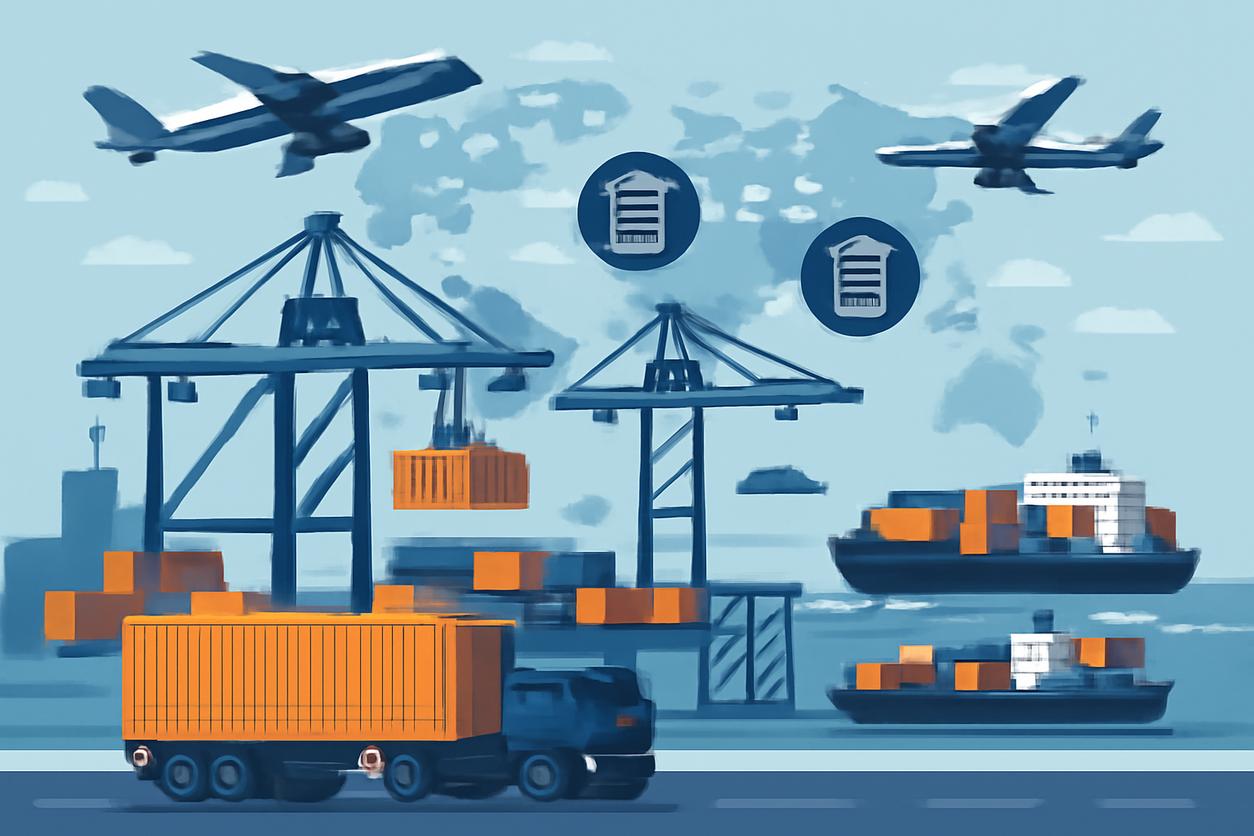
Navigating Global Trade: The Operational Playbook of a Modern International Shipping Agency
Table of Contents
- Executive Snapshot: What an International Shipping Agency Delivers
- Operational Map: Ports, Corridors, and Transit Time Benchmarks
- Private Freight Terminal Access and Terminal Capability Checklist
- Container Types, Loading Plans and Handling Equipment Specifications
- Documentation Playbook: Bills of Lading, Export Declarations, and Manifest Workflows
- Customs Clearance: Step by Step per Common Trade Lanes
- Incoterms and Liability: Practical Implications for Carriers and Shippers
- Charter and Project Cargo Planning
- Insurance Overview for Transported Cargo and Claims Handling Process
- Technology and Visibility: Tracking, ETAs, and Event Management for 2025 and Beyond
- Compliance and Trust Signals: Certifications, Audits, and Sample Case Notes
- Common Pitfalls and Mitigation Tactics for Shipments
- FAQ: Key Shipping Terms and Operational Answers
- Appendix: Glossary of Maritime and Freight Terms
- Sources and Further Reading
Executive Snapshot: What an International Shipping Agency Delivers
An International Shipping Agency serves as the critical operational partner for businesses engaged in global trade. Its primary function is to represent the interests of ship owners, managers, and charterers in ports worldwide, ensuring the seamless and efficient movement of cargo. Beyond simple representation, a modern agency provides a sophisticated operational framework designed to mitigate risk and reduce uncertainty. This involves a unique, data-driven approach that integrates port-level operational details, precise container handling specifications, and a meticulous documentation-first workflow. The ultimate goal is to deliver predictability in a complex logistics chain, minimizing transit delays and protecting clients from potential claims exposure.
Operational Map: Ports, Corridors, and Transit Time Benchmarks
Effective global logistics begins with a comprehensive understanding of the world’s shipping lanes and ports. An expert international shipping agency maintains a detailed operational map, not just of major hubs, but of niche ports and inland corridors. This map is built on real-time data and historical performance benchmarks.
Key Corridors and Port Analysis
Analysis extends beyond simple transit times. An agency evaluates port efficiency, potential congestion points, and local infrastructure. For example, understanding the operational nuances of a specific port, like the Port of Durrës, allows for more accurate scheduling and contingency planning. By mapping these variables, the agency can recommend optimal routes that balance speed, cost, and reliability.
- Trans-Pacific Eastbound: Connecting Asia to North America.
- Asia-Europe (ASEM): Linking major manufacturing hubs with European consumer markets.
- Trans-Atlantic Westbound: Connecting Europe with the Americas.
- Intra-Asia: High-volume, short-sea routes crucial for regional supply chains.
Private Freight Terminal Access and Terminal Capability Checklist
Access to private freight terminals can provide a significant competitive advantage, allowing for prioritized berthing, dedicated yard space, and faster cargo handling. An adept international shipping agency leverages these relationships to bypass common bottlenecks found in public terminals. When evaluating any terminal, a thorough capability assessment is essential.
Terminal Capability Checklist
- Crane Capacity and Type: Gantry, mobile harbor, or floating cranes suitable for the intended cargo.
- Berth Draft and Length: Ensuring the vessel can be safely accommodated.
- Yard and Warehouse Storage: Availability of secure, covered, or open storage for various cargo types.
- Customs and Inspection Facilities: On-site or nearby facilities to expedite clearance.
- Rail and Road Connectivity: Efficient intermodal connections for onward transit.
- Specialized Handling Equipment: Availability of reach stackers, heavy-lift forklifts, and ro-ro ramps.
Container Types, Loading Plans and Handling Equipment Specifications
Proper cargo handling begins with selecting the correct container and creating a precise loading plan. This minimizes the risk of damage, ensures compliance with weight distribution regulations, and optimizes space. A knowledgeable international shipping agency provides expert guidance on these critical elements of sea freight.
Common Container Types and Loading Considerations
Different cargo requires different solutions. For an overview of standard dimensions, see this guide to shipping container sizes.
- Dry Van (DV): Standard containers for general cargo.
- Refrigerated (Reefer): For perishable goods requiring temperature control.
- Open Top (OT): For over-height cargo that must be loaded from the top.
- Flat Rack (FR): For heavy or oversized cargo with non-standard dimensions.
A detailed loading plan, or stowage plan, specifies the exact placement of each container on the vessel. This is coordinated with terminal operators to ensure the correct handling equipment is ready upon arrival, preventing delays.
Documentation Playbook: Bills of Lading, Export Declarations, and Manifest Workflows
In international shipping, documentation is as important as the physical movement of goods. A single error can lead to costly delays, fines, or cargo seizure. A “documentation-first” workflow, championed by a proactive international shipping agency, ensures all paperwork is accurate and submitted ahead of deadlines.
Core Shipping Documents
- Bill of Lading (B/L): The primary contract of carriage, receipt of goods, and document of title. Must be 100% accurate.
- Commercial Invoice and Packing List: Details the transaction and contents of the shipment for customs and payment purposes.
- Export Declaration: A formal statement to customs authorities declaring the goods being exported.
- Cargo Manifest: A comprehensive list of all cargo onboard a vessel, required by port and customs authorities at each stop.
The workflow involves pre-verifying all data against booking information and commercial documents before submitting them to carriers and authorities, preventing discrepancies that can halt a shipment.
Customs Clearance: Step by Step per Common Trade Lanes
Navigating customs is a complex process that varies significantly between countries. An international shipping agency acts as a facilitator, coordinating with customs brokers to ensure a smooth clearance process.
General Customs Clearance Process
- Pre-Arrival Notification: Submission of the cargo manifest and entry documents to customs authorities before the vessel arrives.
- Goods Declaration: A formal declaration is filed by a licensed customs broker, detailing the cargo’s nature, value, and origin.
- Document Review and Inspection: Customs officials review the paperwork and may select the shipment for physical inspection.
- Duty and Tax Assessment: Based on the declared value and tariff classification, applicable duties and taxes are calculated.
- Payment and Release: Once duties are paid and all requirements are met, customs issues a release order, allowing the cargo to leave the port.
Specialized knowledge of specific trade lanes, such as requirements for the U.S. Customs and Border Protection (CBP) or the European Union’s Import Control System 2 (ICS2), is a key value an agency provides.
Incoterms and Liability: Practical Implications for Carriers and Shippers
Incoterms (International Commercial Terms) are a set of globally recognized rules that define the responsibilities of sellers and buyers. They clarify who is responsible for paying for and managing the shipment, insurance, documentation, and customs clearance. An international shipping agency helps clients understand the practical implications of their chosen terms.
Common Incoterms and Liability Transfer
- EXW (Ex Works): The buyer assumes almost all responsibility from the seller’s doorstep.
- FOB (Free On Board): The seller’s responsibility ends once the goods are loaded onto the vessel nominated by the buyer.
- CIF (Cost, Insurance, and Freight): The seller pays for transport and insurance to the destination port, but risk transfers to the buyer once the goods are on board the vessel.
Understanding the precise point where liability transfers is crucial for arranging insurance and managing risk effectively.
Charter and Project Cargo Planning
Project cargo involves the transportation of oversized, heavy, or high-value items that cannot fit into standard containers. This requires meticulous planning and execution. An international shipping agency with project cargo expertise coordinates every detail, from route surveys and specialized equipment sourcing to securing necessary permits.
Key Planning Stages for Project Cargo
- Feasibility Study: Assessing the viability of the project, including route analysis and equipment requirements.
- Vessel Chartering: Selecting and chartering the appropriate vessel (e.g., heavy-lift, semi-submersible).
- Engineering and Lashing Plans: Designing custom solutions for lifting, securing, and transporting the cargo safely.
- On-Site Supervision: Providing experienced personnel to oversee the loading and discharge operations.
Insurance Overview for Transported Cargo and Claims Handling Process
Cargo insurance protects shippers against financial loss due to damage or loss of goods during transit. While carriers have limited liability, it is often insufficient to cover the full value of the cargo. A diligent international shipping agency advises on appropriate insurance coverage.
Types of Cargo Insurance
- All-Risk Coverage (Institute Cargo Clauses ‘A’): The broadest form of coverage, protecting against most physical loss or damage from any external cause.
- Named Perils Coverage (Institute Cargo Clauses ‘B’ and ‘C’): Covers only the specific risks listed in the policy, such as fire, sinking, or collision.
In the event of a claim, the agency assists in the process by gathering necessary documentation (B/L, survey report, commercial invoice) and liaising with the insurance company to facilitate a prompt resolution.
Technology and Visibility: Tracking, ETAs, and Event Management for 2025 and Beyond
The future of logistics is driven by technology. Leading international shipping agencies are investing in platforms that provide real-time visibility and predictive analytics. For strategies post-2025, the focus will be on integrating AI and machine learning to move from reactive tracking to proactive event management.
Technological Capabilities
- Real-Time GPS and AIS Tracking: Live monitoring of vessel and container location.
- Predictive ETAs: Algorithms that analyze vessel speed, port congestion, and weather to provide more accurate arrival times.
- Automated Event Alerts: Notifications for key milestones like vessel departure, port arrival, and customs clearance.
- Data Integration: APIs that connect the agency’s platform with the client’s ERP or supply chain management systems for seamless data flow.
Compliance and Trust Signals: Certifications, Audits, and Sample Case Notes
Trust is paramount in the shipping industry. An established international shipping agency demonstrates its commitment to quality, security, and ethical practices through internationally recognized certifications and transparent operations.
Key Trust Signals
- ISO 9001: Certification for quality management systems.
- Authorized Economic Operator (AEO): A status granted by customs authorities to businesses that meet high standards of security and compliance, often resulting in expedited clearance.
- Regular Audits: Both internal and external audits to ensure adherence to operational and financial protocols.
- Transparent Case Notes: Maintaining a clear, accessible record of all actions and communications related to a shipment.
Common Pitfalls and Mitigation Tactics for Shipments
Even with careful planning, shipments can face disruptions. A seasoned international shipping agency excels at anticipating these issues and implementing effective mitigation strategies.
- Pitfall: Documentation Errors.
Mitigation: Implement a multi-stage verification process for all documents before submission.
- Pitfall: Customs Holds.
Mitigation: Ensure accurate tariff classification and value declaration; pre-file documentation where possible.
- Pitfall: Port Congestion and Rolled Cargo.
Mitigation: Leverage carrier relationships for priority loading and use data analytics to forecast congestion, allowing for alternative routing.
- Pitfall: Cargo Damage.
Mitigation: Provide expert advice on proper packing, blocking, and bracing; supervise loading operations for sensitive cargo.
FAQ: Key Shipping Terms and Operational Answers
What is the difference between a freight forwarder and an international shipping agency?
A freight forwarder acts on behalf of the shipper to arrange transportation. An international shipping agency primarily represents the carrier (the ship owner or operator) in a port, handling the vessel’s operational and documentary needs.
What are demurrage and detention?
Demurrage charges are incurred when a container is not picked up from the port within the allotted free time. Detention charges apply when the empty container is not returned to the carrier’s designated depot within its free time.
What is a Bill of Lading (B/L)?
It is a legally binding document issued by a carrier to a shipper that serves as a receipt for the cargo, a contract of carriage, and a document of title to the goods.
Appendix: Glossary of Maritime and Freight Terms
- AIS (Automatic Identification System): A tracking system used on ships for identifying and locating vessels.
- Charter Party: A contract for the hire of a vessel.
- ETA/ETD: Estimated Time of Arrival / Estimated Time of Departure.
- FCL/LCL: Full Container Load / Less than Container Load.
- TEU (Twenty-foot Equivalent Unit): A standard unit for measuring container capacity on ships. One standard 40-foot container equals two TEUs.